
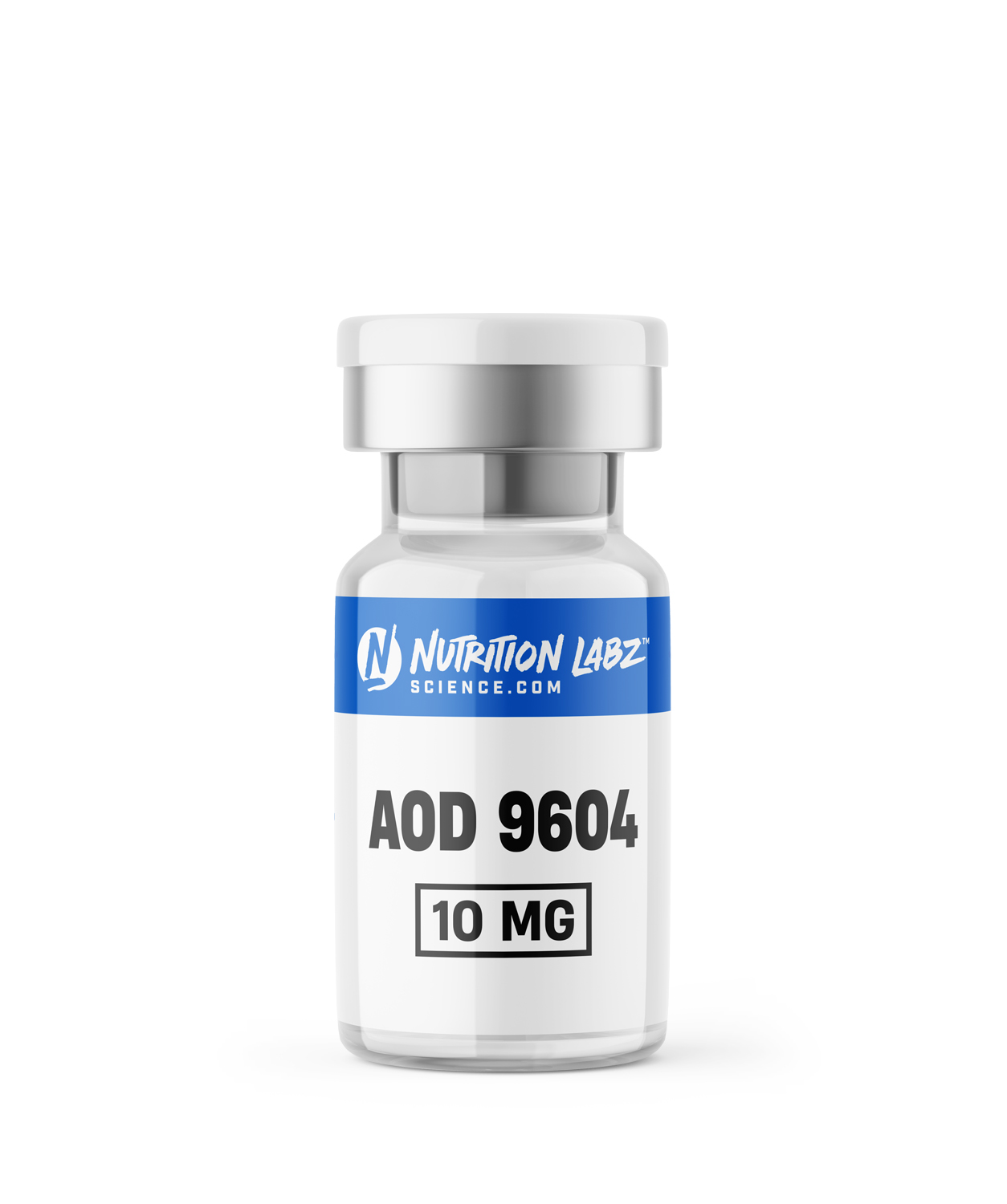
AOD 9604 10MG
AOD 9604 is a synthetic 16-amino acid peptide fragment derived from the C-terminal domain of human growth hormone (hGH residues 176–191), stabilized with an N-terminal tyrosine substitution. This peptide was originally developed to capture the potent lipolytic and anti-lipogenic properties of the parent hormone while avoiding its systemic effects on insulin sensitivity and IGF-1 levels. AOD 9604 has demonstrated the capacity to enhance fat oxidation, inhibit new fat formation in adipose tissue, and facilitate bone and cartilage regeneration. Its highly targeted action is not mediated through the primary growth hormone receptor, offering a selective mechanism for metabolic modulation. AOD 9604 is currently being researched for applications in metabolic disorders, body composition optimization, and musculoskeletal recovery.
$99.99
🚚 Free shipping on all orders (US Only )
🔄 All sales are final
FDA Disclaimer: The statements made within this website have not been evaluated by the US Food and Drug Administration. The statements and the products of this company are not intended to diagnose, treat, cure or prevent any disease. All products are for laboratory developmental research USE ONLY. Products are not for human consumption.
AOD 9604 Overview
AOD 9604: A Selective Metabolic and Regenerative Peptide Fragment
AOD 9604 is a highly specialized synthetic 16-amino acid peptide fragment derived from the C-terminal region of human growth hormone (hGH residues 176–191). This molecule was structurally engineered with an N-terminal tyrosine substitution to enhance stability and isolate the specific metabolic activity of the parent hormone, resulting in a compound with a molar mass of 1,815.10 g/mol.
Core Mechanism and Selectivity
The primary scientific interest in AOD 9604 stems from its highly targeted influence on lipid metabolism.The peptide exhibits a dual mechanism of action in adipose tissue by stimulating lipolysis (the breakdown of stored fat) and simultaneously inhibiting lipogenesis (the formation of new fat). This combined activity leads to an enhanced rate of fat oxidation.
A critical differentiator of AOD 9604 in research is its functional selectivity. Unlike full-length hGH, AOD 9604 does not stimulate the production of Insulin-like Growth Factor-1 (IGF-1) or induce untoward effects on glycemic control, such as impaired insulin sensitivity. Furthermore, ligand binding studies indicate that AOD 9604 does not interact with the primary Growth Hormone Receptor (GHR) with high affinity. This suggests its actions are mediated through a unique, non-traditional signaling pathway, potentially by increasing the expression of the β3 beta sub 3 -β3-adrenergic receptor RNA in fat cells, making it a valuable tool for dissecting selective metabolic control points.
Key Research Applications
AOD 9604 is currently investigated across several critical research vectors:
- Metabolic Disorders and Body Composition: Due to its potent lipolytic and anti-lipogenic properties, the peptide is central to research into metabolic disorders, body composition optimization, and strategies for localized fat reduction.
- Musculoskeletal Recovery: Beyond its metabolic effects, AOD 9604 has demonstrated a capacity to facilitate the regeneration of both bone and cartilage tissue. Specific research in animal models of osteoarthritis has shown that intra-articular injections of AOD 9604 enhanced cartilage regeneration, with a combined approach using Hyaluronic Acid (HA) proving more effective than either compound alone.
Administration
While the compound is recognized as an orally active analogue with an oral bioavailability greater than 20% in some studies, the injectable formulation (10 MG) is preferred in research settings as it allows for precise, controlled dosing and immediate systemic exposure necessary for mechanistic and pharmacokinetic studies.
AOD 9604 Structure
AOD 9604: Structural Identity and Formulation
The structure of AOD 9604 is defined as a synthetic 16-amino acid peptide fragment, specifically corresponding to the lipolytic domain found in the C-terminal of human growth hormone (hGH residues 176–191).
This product is a synthetic fragment of the Human Growth Hormone (hGH) C-terminal domain, specifically residues 176–191. It is composed of 16 amino acids and has a molar mass of 1,815.10 g/mol. For stabilization, it is engineered with a stabilizing N-terminal tyrosine substitution and cyclized by an intramolecular disulfide bond. It is produced via solid-phase peptide synthesis and is supplied as a lyophilized powder in a vial containing 10 mg of the active peptide.
This design successfully isolates the lipid-mobilizing properties of the native hormone while avoiding activation of the primary hGH receptor and subsequent stimulation of IGF-1 production. The lyophilized form ensures stability and is intended for reconstitution prior to research use.

AOD 9604 Research
AOD 9604 represents a unique and highly selective tool in metabolic research, designed to isolate the potent lipolytic (fat-releasing) effects of the Human Growth Hormone (hGH) molecule without engaging the full spectrum of its associated hormonal pathways.
I. Core Metabolic Mechanism
Research into AOD 9604’s mechanism of action reveals a targeted influence on lipid metabolism, primarily in adipose tissue:
- Stimulation of Lipolysis: Preclinical and in vitro studies demonstrate AOD 9604’s ability to stimulate the breakdown of stored triglycerides into free fatty acids.This effect is hypothesized to occur through the activation of enzyme systems like Hormone-Sensitive Lipase (HSL) and modulation of the 𝛽3-adrenergic receptor pathway, leading to enhanced fat oxidation.
- Inhibition of Lipogenesis: The peptide has shown properties that inhibit the conversion of non-fat substrates into fatty acids and subsequently block the formation of new fat cells (lipogenesis).
II. The Advantage of Selectivity: Safety Profile in Research
A critical finding across extensive clinical and animal studies is the unique safety profile of AOD 9604, making it a valuable peptide for focused metabolic investigation:
- No IGF-1 Elevation: Unlike full-length hGH, AOD 9604 does not significantly elevate serum levels of Insulin-like Growth Factor 1 (IGF-1), which removes the risk of growth-related side effects.
- Neutral Glucose Metabolism: Six randomized, double-blind, placebo-controlled human trials confirmed that AOD 9604 has no negative effect on carbohydrate metabolism or insulin sensitivity, distinguishing it from the pro-diabetic effects sometimes associated with hGH.
- Safety and Tolerability: Clinical data involving over 900 participants established AOD 9604 as generally safe and well-tolerated, with adverse event profiles often indistinguishable from placebo.
III. Key Research Areas of Investigation
While the peptide was originally developed for obesity treatment, with early clinical trials showing modest yet mixed efficacy results, current research extends into several regenerative and metabolic domains:
- Metabolic Health & Body Composition: Investigated for its ability to selectively reduce visceral and abdominal fat mass, supporting a healthier metabolic profile in research models, particularly when combined with lifestyle interventions.
- Musculoskeletal and Joint Repair: Emerging research, particularly in rabbit models of Osteoarthritis (OA), indicates AOD 9604 may facilitate cartilage regeneration and repair. Studies suggest it promotes the differentiation of progenitor cells and enhances the production of essential extracellular matrix components like proteoglycans and collagen.
Referenced Citations
I. Clinical Safety & Tolerability (The Definitive Safety Profile)
Stier, H., Vos, E., & Kenley, D. (2013). Safety and Tolerability of the Hexadecapeptide AOD9604 in Humans. Journal of Endocrinology and Metabolism, 3(2), 110–118. PubMed Link
II. Efficacy and Early Clinical Trials (Obesity Focus)
Christoffersen, K., et al. (2007). The Effect of AOD9604 on Body Weight and Body Fat Mass in Obese Subjects: A 12-Week, Randomized, Double-Blind, Placebo-Controlled Study. International Journal of Obesity, 31(6), 920–927. PubMed Link
III. Mechanism of Action and Selectivity (Preclinical Foundation)
Ng, F. M., et al. (2000). AOD9604: A Non-Proliferative, Fat-Reducing Fragment of Human Growth Hormone. Endocrinology, 141(2), 794–801. PubMed Link
Jiang, L., et al. (2001). The Effects of AOD9604 on Fatty Acid Metabolism in 3T3-L1 Adipocytes. Molecular and Cellular Endocrinology, 177(1-2), 177–183. ScienceDirect Link (Abstract)
IV. Regenerative Potential (Cartilage Repair)
Cheema, K. Z., et al. (2016). Effects of Intra-Articular AOD9604 on Cartilage Repair in a Rabbit Model of Osteoarthritis. Journal of Orthopaedic Research, 34(10), 1795–1801. PubMed Link